
DESCRIPTION
The cocoa tree is a tropical tree grown in a hot, humid climate, mainly in regions between 20 degrees north and south of the Equator. Although the main outlet for cocoa beans is chocolate, there are in fact four major by-products: cocoa liquor and paste, cocoa butter, cocoa cake and cocoa powder.
ORIGIN
Cocoa appears to originate from the Amazon basin, spreading to Central America and more particularly to Mexico on the Yucatán peninsula and to the Orinoco basins. Indigenous peoples such as the Mayas and Aztecs already used it as currency and drank a bitter beverage, xocoalt. Cocoa was then known by the evocative name of food of the gods (which inspired the cocoa tree’s scientific name “theobroma cacao”, theobroma meaning food of the gods in Latin).
When Christopher Columbus discovered cocoa beans in America, their popularity did not spread to Europe immediately; it was not until 1524 that Hernando Cortez sent the first shipment of cocoa to Emperor Charles V. By heating the mixture, the Spanish added cane sugar and a little vanilla to improve the taste, and used the drink mainly for medicinal purposes. They kept the chocolate recipe secret for almost a century, until the marriage of the King of Spain’s daughter to King Louis XIII of France in 1615.
The invention of the hydraulic press to extract cocoa butter in 1828 and the development of solid and milk chocolate manufacturing by the Swiss (around 1879) are considered the main breakthroughs that shaped today’s chocolate industry.
DESCRIPTION AND TECHNICAL CHARACTERISTICS
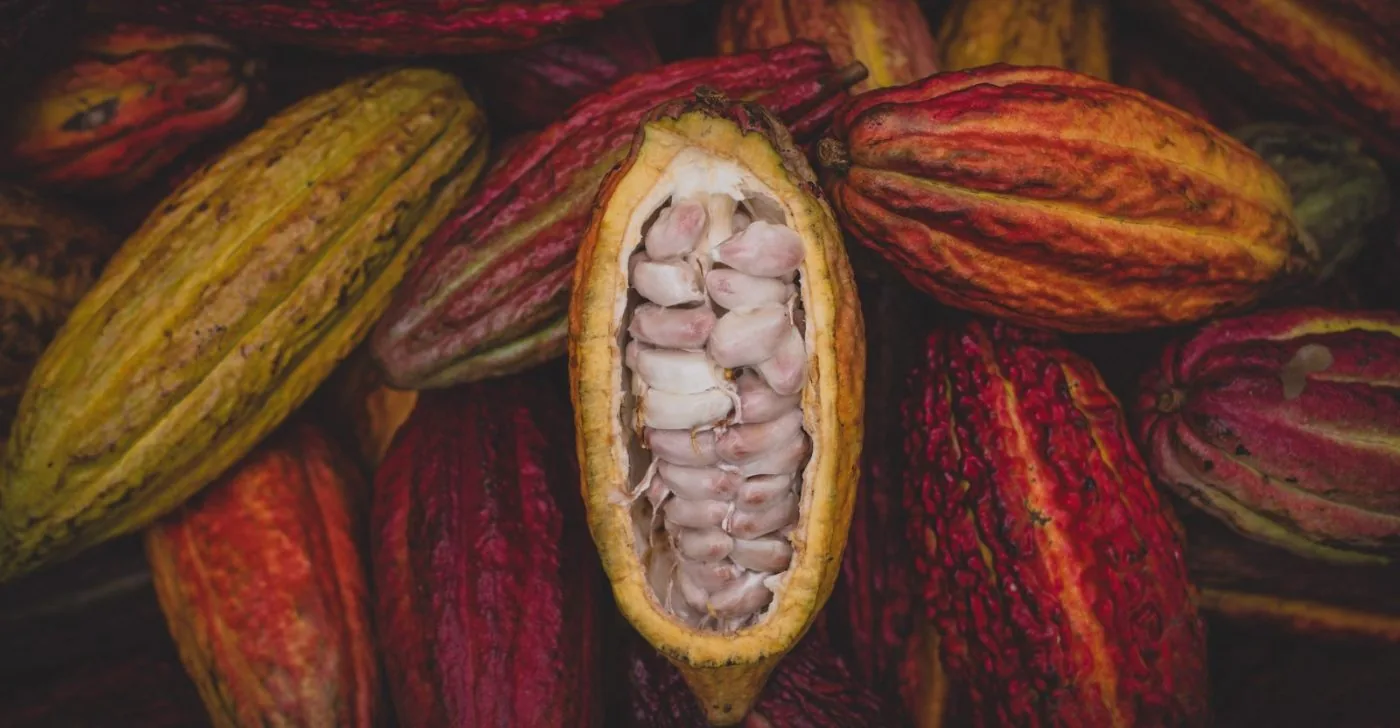
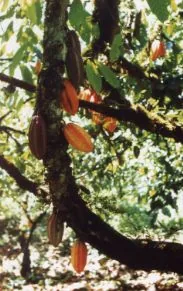
Cocoa plants (Theobroma cacao L. of the Sterculiaceae family) are generally trees 4 to 8 metres tall, although they can reach almost 10 metres in the forest. The cocoa tree has a straight trunk, light whitish wood and thin, smooth brown bark. The fruit, the pod, 15 to 25 centimetres long, contains about 30 to 40 seeds which, once dried and fermented, are known as cocoa beans. These beans, brown to reddish on the outside, are covered with a whitish skin.
Ideal growing conditions are rainfall of 1,150 to 2,500 millimetres a year, temperatures between 21°C and 32°C, a dry season of less than 3 months and deep soil rich in organic matter.
There are three varieties of cocoa. The most widespread is commonly called Forastero. Rather bitter, it accounts for about 90% of world cocoa bean production and is grown mainly in West Africa and Brazil. The second type is known as Criollo. It produces “fine cocoa” beans; its importance has declined but it is still found in the Caribbean, the Antilles, Venezuela, Papua New Guinea, Sri Lanka, East Timor and Indonesia. The last category, Trinitario, a hybrid of Criollo and Forastero, has a fairly fine but mild aroma.